


Kapton has been used as electrical wire insulation since 1970. It handles extreme temperatures well, but it also has some well-known weaknesses. So, is Kapton wire safe?
Get Your Free Sample!
Explore our custom services now. Email us at sales@wiringo.com for more details.
What are Kapton Wires?
Firstly, electrical connections can feature either aluminum or copper wires. Furthermore, the type of insulation will depend on their operating environment. As such, you will find industry insiders referring to wire types by the type of insulation they employ.
Kapton wires are copper wires that feature a polyimide film that allows the conductor to operate across a vast temperature range. Additionally, the excellent dielectric properties, incredible malleability, and low outgassing rate see Kapton wires in use across many places.
In the late 1960s, American chemical company DuPont released Kapton as one of its revolutionary polymer products. For instance, they released nylon, Teflon, and Neoprene. Also, the polymer results from the condensation of 4,4-oxydiphenylene and pyromellitic dianhydride. This happens during a process called polymerization.
The final product is an aromatic lightweight insulation material. The material can accommodate a temperature range from zero to four hundred degrees Celsius.
So, every electrician prefers Kapton wires for installations. This is especially where resistance to temperature, weight, and flexibility are mandatory.
Use of Kapton wires in several vacuum environments:
Kapton is mainly a polyimide film, which has been widely used in flexible electronics.
Invented in 1960 by the DuPont Corporation, this film remains stable in a wide range of temperatures ranging from 4-673K.
Due to its thermal properties and low-outgassing threshold, its use in high vacuum environments is quite common.
Kapton wires are very effective in a demanding temperature range and environments without humidity and restricted chafing.
Get Your Free Sample!
Explore our custom services now. Email us at sales@wiringo.com for more details.
Common Concerns About Kapton Wires?
Studies have found two main weaknesses in Kapton-insulated wire.
Charring
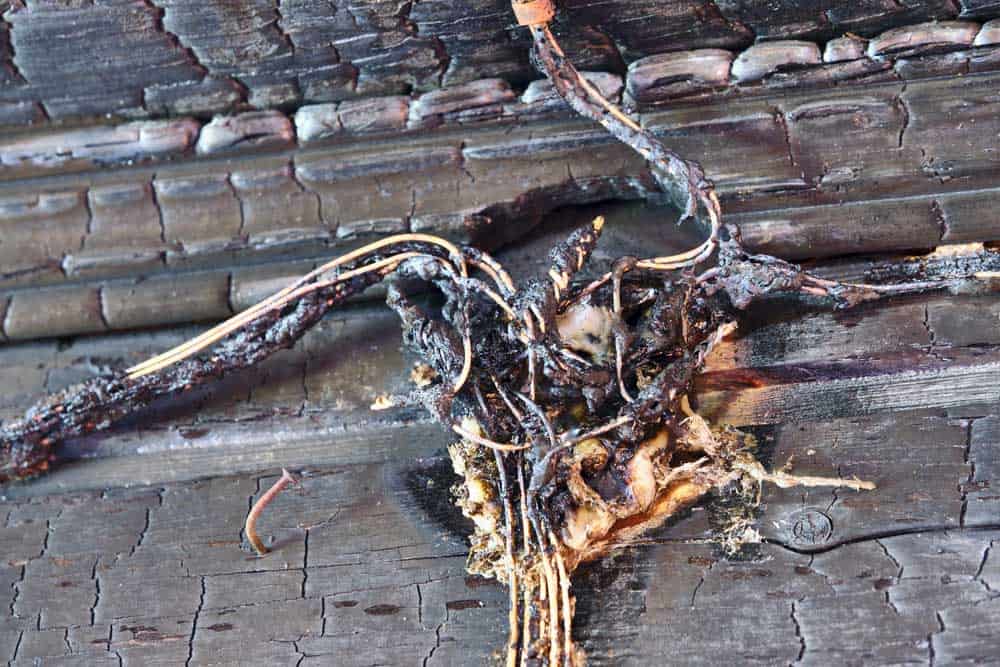
Charred electrical wires.
Charring refers to a situation where the wire insulation burns following an electric short.
As such, it changes to form a carbon residue that compromises the wire’s integrity. Kapton wires feature a combination of copper wire strands.
They also have an aromatic polyimide acting as the insulation material.
Results from the studies reveal that a Kapton insulated wire tends to be more susceptible to charging than other wire types.
Furthermore, the resultant carbon residue is both conductive and flammable.
Therefore, any surge in the electric current can cause the entire system to ignite.
Arc tracking
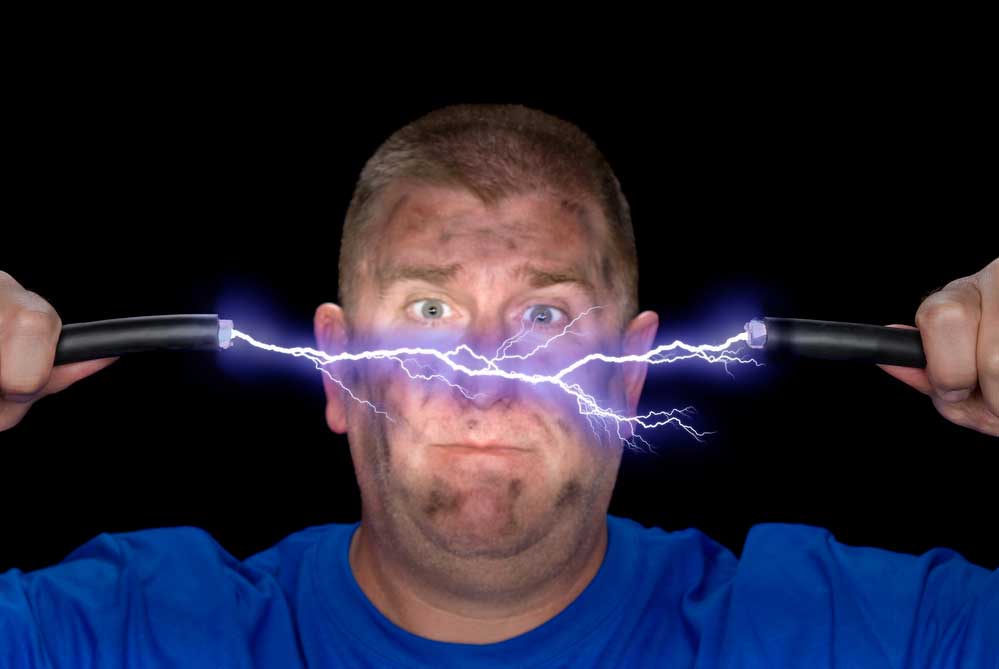
Man holding arcing electrical wires.
Arcing involves a situation where the current jumps between connections rather than flowing through the conductor.
Additionally, it occurs where there is damage to the wire insulation through charring or mechanical wear.
As a result, an electric charge from the exposed conductor can jump from one conducting surface to another.
Furthermore, the flashes of electricity can reach temperatures as high as 19,500 degrees Celsius, enough to cause a fire.
Keeping this in mind, Kapton insulated electrical wiring experiences a high degree of abrasion within cable harnesses.
As such, the polyamide polymer insulation breaks, exposing the copper wire within. As a result, it increases the possibility of arcing occurring.
So, What are the Best Solutions to Kapton Wire Failures?
The best way to mitigate the impending danger from Kapton insulated wiring is to replace the existing wiring.
How Do You Determine the Health of a Kapton Wire?
Like with all lab-produced products, polyimide materials degrade over time. In addition, the degradation can lead to drastic consequences, including the destruction of equipment or death.

Scientists checking the viscosity of a polymer
DuPont recommends the Inherent Viscosity Test as the best way to determine the health of a Kapton wire.
It involves measuring the molecular weight of different layers of polyimide. Then, comparing the results to DuPont’s minimum molecular weight measure.
Accordingly, you can schedule your monitoring, maintenance, and rewiring programs, to ensure the proper functioning of your electrical installations.
FAQ:
Why is Kapton referred to as “POLYIMIDE” in most articles associated with electronics?
Kapton is a trademark invention of DuPont Corporation. The POLYIMIDE is a generic name that includes all producers of the material used in the wires and cables.
Should I replace the wire when the insulation starts flaking off?
No, it’s not required. First, you must understand the structure of a polyimide wire.
These wires have two polyimide wrap layers with an adhesive in between that acts as a seal. These two polyimide layers collectively form four insulation layers.
Out of these layers, the outer one is the lacquer layer, which acts as a surface printing wire identification.
The layer does not have any mechanical or electrical value. Thus, even if it flakes off, you need not go for a replacement of wire.
How can I determine the health of a Kapton wire?
Northern Virginia-based engineering firm Lectromec has performed extensive research on the Kapton wire degradation process.
Under its research, the firm uses an inherent viscosity method for degradation analysis.
This is a chemical process that predicts the internal integrity of the polymer and quantifies the degradation of the material.
Conclusion
So, is Kapton wire safe? Kapton wires continue to feature in many electrical works. For example, the KK-J-24s-SLE-100 wire features a Kapton Tape Wrap as insulation. Electricians use it as medical wire in many laboratory electric works. Finally, you can learn more about Kapton wires and IVT services by contacting Wiringo’s representatives.
Get Your Free Sample!
Explore our custom services now. Email us at sales@wiringo.com for more details.